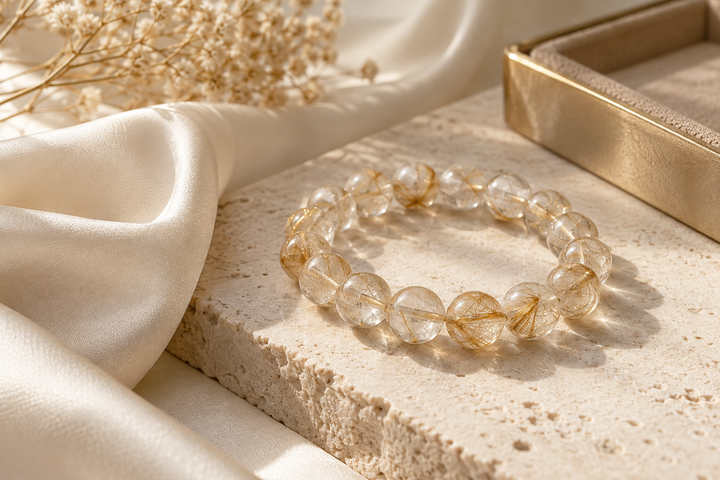
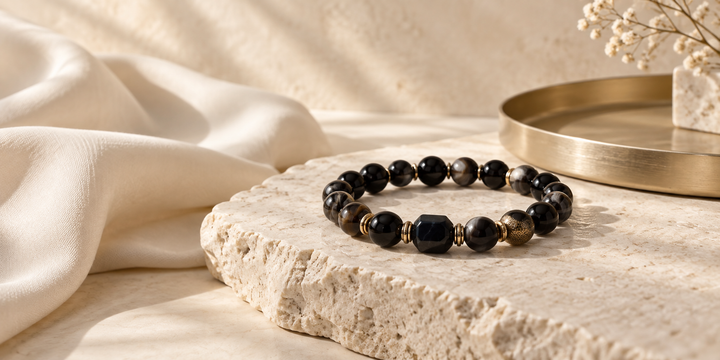
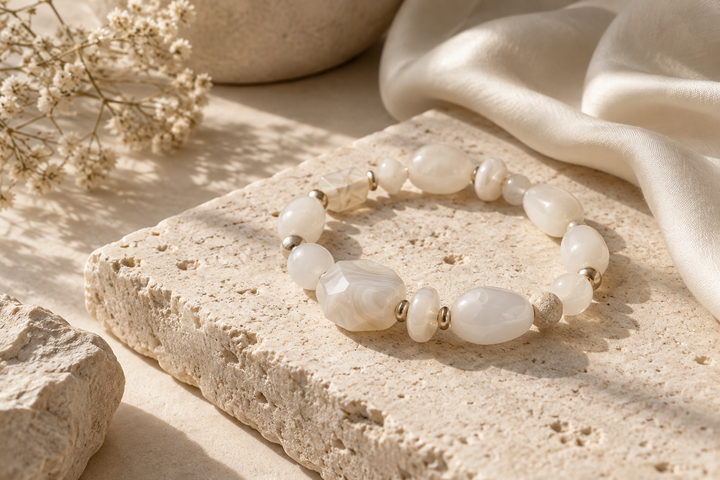
How to care for crystal bracelets starts with one distinction: a finished bracelet is more than its gemstones. Elastic and metal accents have their own care needs. For routine SoftLumina care, remove the bracelet before bathing, swimming, exercise, or sleep; keep it away from perfume, lotion, and harsh chemicals; wipe it with a soft, dry cloth; and store it in a clean, dry place. Check the guidance for your particular piece before trying anything more involved.
Start With the Materials in Your Bracelet
Read the full product description. A bead's care guidance does not automatically apply to the cord or plated details beside it. Treatments may also affect what a finished piece can tolerate. If the materials are unclear, ask the seller before cleaning it.
SoftLumina lists the Amora Pure Softness Bracelet with White Moonstone and Green Aventurine. The Aurelia Golden Balance Bracelet has Cherry Blossom Agate, Citrine, and 18K Gold-Plated Copper Accents. Both product pages advise a gentle dry-cloth wipe and avoiding water, perfume, lotion, and harsh chemicals, despite their different material combinations.
Gemological advice can help you understand an individual stone. The product's care directions tell you how to treat the assembled bracelet. When the two seem different, follow the more conservative instructions for the complete piece.
Build Gentle Habits Into Everyday Wear
Put a bracelet on after perfume and lotion have dried. Give it room beside a watch or another bracelet, and adjust a sleeve before it catches a charm or bead.
Wearing several bracelets together is a styling choice, but it also brings more surfaces into contact. If you enjoy layering, our guide to stacking crystal bracelets offers ideas for a restrained two- or three-piece look. Remove and put away each bracelet separately after wear.
Should Crystal Bracelets Get Wet?
Do not treat water resistance as a property of every crystal bracelet. A gemologist may say a particular loose stone can be cleaned with warm, soapy water. That does not establish that an elastic cord, plated accent, adhesive, finish, or other part of a finished bracelet should be soaked or worn in a shower.
SoftLumina's product Care & Maintenance instructions say to avoid water and remove the bracelet before bathing or swimming. If it is splashed, gently blot it with a soft cloth, let it dry away from heat, and check the cord and accents before wearing it again. If heavily wet or soiled, ask for material-specific advice instead of guessing at a soaking method.
How to Clean a Crystal Bracelet Safely
For routine care
Start with a clean, soft, dry cloth. Support the bracelet in your hand and wipe the beads and metal details gently, one area at a time. Avoid pulling the strand taut to reach between beads. A light wipe after wear is usually more useful than waiting for a buildup and then trying a stronger cleaner.
Keep toothpaste, bleach, abrasive powders, and jewelry dips away unless the maker approves them for every material. “Safe for jewelry” does not automatically mean safe for a mixed-material piece.
When a dry wipe is not enough
Check the finished product's directions or ask SoftLumina. A method recommended for a loose gemstone may not suit the assembled bracelet. If you notice a loose accent, fraying cord, or new chip, stop cleaning and seek product-specific guidance.
Why Gemstone-Specific Guidance Still Matters
Different stones respond differently to knocks, heat, and cleaning. The GIA moonstone care guide rates moonstone at 6 to 6.5 on the Mohs scale and describes its toughness as poor; it says ultrasonic and steam cleaners are never recommended. That is useful context for a bracelet containing moonstone, including one worn daily. Our moonstone bracelet guide discusses its appearance and how to choose a piece, while this guide addresses care after purchase.
The GIA citrine care guide rates citrine at Mohs 7. It says abrupt temperature changes can cause fractures, steam cleaning is not recommended, and ultrasonic cleaning is usually safe for the stone except in certain treatment circumstances. That narrower statement about citrine is not permission to place an entire bracelet with cord and plated details in an ultrasonic cleaner. The safest method depends on every component, not the highest hardness number in the design.
Hardness alone cannot summarize a stone's resistance to breaking, heat, light, or chemicals. Product-specific guidance still matters.
Care for the Elastic Cord and Construction
An elastic beaded bracelet should be handled as a complete strand. To put it on, ease the beads over your hand instead of stretching one small section sharply. To take it off, guide the beads back over your hand rather than tugging at a charm or one accent bead. These habits limit unnecessary strain on the construction.
Check the cord near the knot and where beads meet an accent. If you see fraying, unusual slack, or a displaced bead, pause wearing it and ask about repair or restringing. Cleaning will not solve a structural issue. Store the piece without winding it tightly around an object.
Protect Gold-Plated and Silver-Plated Accents
Plated details deserve their own attention. The Aurelia Golden Balance Bracelet's accents are 18K gold-plated copper, not solid gold. Keep perfume, lotion, household cleaners, and abrasive cloths away from plated surfaces. Wipe them lightly with the same soft, dry cloth recommended on the product page.
Do not scrub a dull spot to polish it back to a new finish. Check the materials listing before choosing a cleaner: silver-colored does not necessarily mean sterling silver, and a gold tone does not identify the metal underneath.
Store Crystal Bracelets Separately
Give each bracelet a clean, dry place of its own, such as a soft pouch or a divided jewelry box. This keeps cords from tangling and reduces repeated contact between beads, metal details, and neighboring jewelry. GIA's general jewelry-care guidance also recommends padded or separate storage to help prevent scratches and impact damage.
Do not leave a bracelet loose with watches, keys, or other hard objects. GIA notes that heat or sudden temperature changes can damage moonstone and that prolonged intense light may fade some citrine color. A protected place at ordinary room conditions is a sensible choice.
Pack With Care When Traveling
Use a small pouch or individual compartment rather than dropping bracelets together into a toiletry bag. Secure clasps or charms so they do not catch on another piece, and keep the pouch separate from bottles that might leak. When you unpack, lay the bracelet flat and check that the strand and accents look as they did before the trip.
Know When to Remove Your Bracelet
Taking off jewelry is part of wearing it well. Remove a SoftLumina crystal bracelet before a shower, swim, workout, or bedtime, as its current care instructions advise. Set it aside before applying perfume or lotion and before working with cleaning products. If an activity repeatedly catches the bracelet or places pressure on the beads, put it in its pouch until you are done.
Natural Variation Is Not the Same as New Damage
SoftLumina notes that natural crystals vary in color, clarity, translucency, texture, and internal pattern. Differences present on arrival do not by themselves indicate damage. Compare the piece with its own earlier appearance.
A fresh chip, a changed surface, a loose accent, or a cord that appears frayed is a different question. Stop wearing the piece while you assess it. Do not try to conceal a structural issue with polish or a harsh cleaner; seek advice about the particular bracelet instead.
Frequently Asked Questions
Can crystal bracelets get wet?
Care depends on the complete bracelet, not only its stones. SoftLumina's current product guidance says to avoid water. If a bracelet is splashed, blot it gently and let it dry away from heat; ask for product-specific advice if it becomes thoroughly wet.
Can I shower with a crystal bracelet?
SoftLumina advises removing its bracelets before bathing or swimming. Water and personal-care products may reach the cord and accents as well as the beads, so a loose gemstone's cleaning instructions are not a reason to shower in a finished bracelet.
How should I clean a crystal bracelet?
For the SoftLumina examples here, gently wipe the beads and metal details with a clean, soft, dry cloth. If that does not resolve the issue, check the product's directions or ask the maker before using moisture or a cleaning solution.
Can I use an ultrasonic or steam cleaner?
Do not use either on a mixed-material bracelet without explicit guidance for every component. GIA never recommends ultrasonic or steam cleaning for moonstone; it also advises against steam for citrine. A method that may suit one loose stone may still be unsuitable for the cord, plating, or another stone in the bracelet.
How should crystal bracelets be stored?
Keep each piece clean, dry, and separate in a soft pouch or divided jewelry box. Avoid tangling the cord with other jewelry or leaving beads in contact with hard objects.
How often should I clean a bracelet?
There is no universal schedule. A gentle dry wipe after wearing is a useful routine; check the piece sooner after contact with lotion, perfume, or dirt. Follow the care instructions for that finished bracelet if it needs more than routine attention.
A Simple Routine Worth Keeping
How to care for crystal bracelets comes down to the whole piece: know its materials, remove it for water and strenuous activity, wipe it gently, and store it separately. For SoftLumina's current recommendations, see the jewelry care answer in our FAQ. When a question goes beyond that baseline, consult the finished product's guidance.