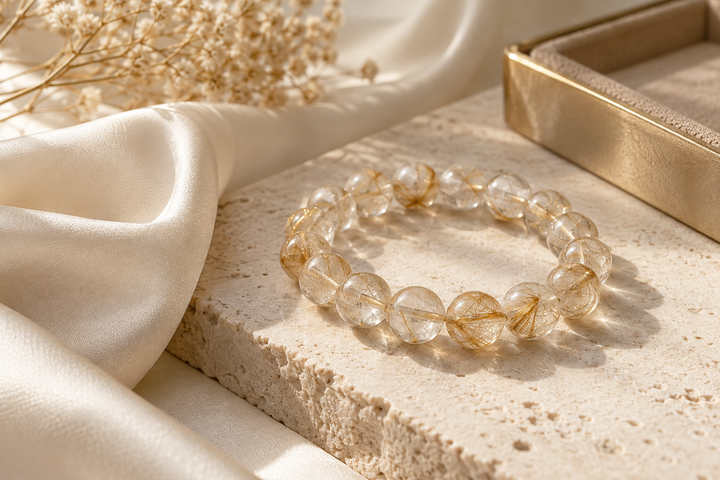
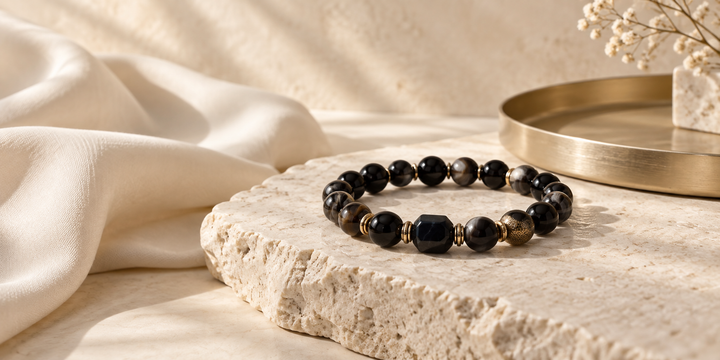
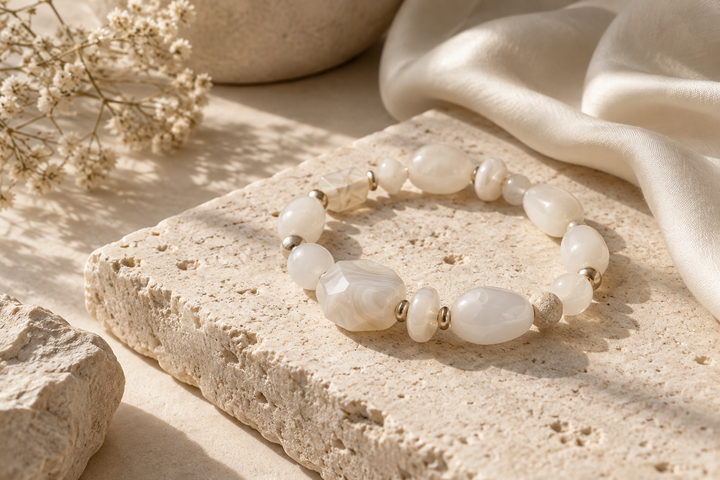
Learning how to stack crystal bracelets starts with two pieces: one that draws the eye and another that gives it room to stand out. Repeat a color, vary the visual weight, and check how the bracelets move on your wrist. A third piece is optional. The aim is a combination that works with your clothes and feels easy to wear.
You do not need matching stones or a ready-made set. A soft green bead can connect two different designs; a restrained metal detail can echo a ring. Those small relationships make a stack feel considered.
How to Stack Crystal Bracelets Without Overcomplicating It
Lay your bracelets beside the outfit you plan to wear. Choose a starting piece, add a companion, then look at the whole combination rather than each bracelet separately. Use this simple sequence:
- Choose the bracelet you most want to feature.
- Find a quieter piece that repeats one of its colors or finishes.
- Put both on and move your wrist normally.
- Add a third only if it contributes something missing.
Assess the result with your rings, watch, and sleeves in view. An arrangement that looks balanced on a tray can feel busy once the rest of your jewelry is on.
Start With Two Bracelets
Two bracelets make it easier to see what each contributes. You can compare color, surface detail, and proportion without deciding how several competing pieces should relate.
Begin with two designs that share one feature, rather than trying to match everything. A pale green repeated across different materials can be enough. If both pieces are colorful or heavily detailed, set one aside and try a simpler companion. You are choosing a relationship between designs, not filling the available space on your arm.
Choose One Visual Focal Point
Your focal bracelet might have a stronger color, more visible pattern, larger-looking beads, or a distinctive accent. Let that detail lead. The supporting bracelet should be easier for the eye to move past, so the two pieces do not demand equal attention.
For a warm-toned direction, the Aurelia Golden Balance Bracelet combines Cherry Blossom Agate, Citrine, and 18K Gold-Plated Copper Accents. Its blush, golden yellow, and champagne palette offers several colors to echo in a companion piece. Choose one of those colors instead of adding an entirely new palette.
Balance Color, Texture, and Visual Weight
Repeat one color
A repeated color gives the eye a connection to follow. It can be a small detail rather than the dominant shade in both bracelets. White, soft green, or blush can provide continuity while the other colors remain distinct.
The Amora Pure Softness Bracelet, made with White Moonstone and Green Aventurine, offers a luminous white and soft green direction. The Serena Soft Harmony Bracelet uses Crackle Clear Quartz and Qingmian Alashan Agate, with a listed palette of crystal clear, sage green, and soft rose. They illustrate how green can connect different designs. This is a color comparison, not an official stacking set or a physically tested pairing.
Vary texture and scale
Compare translucent-looking beads with more opaque ones, smooth-looking surfaces with visible patterns, and smaller-looking beads with larger ones. One contrast is often enough. Several strong contrasts can obscure the detail that first attracted you.
Visual weight describes how prominent a bracelet looks, not its measured weight. Darker colors, dense patterns, and larger accents can draw attention even in a restrained design. If both bracelets look equally prominent, choose a quieter companion or wear the pieces on separate wrists.
Coordinate Metal Accents
Repeating a metal color is an easy way to connect a stack with your rings or earrings. Warm gold-toned details can echo a gold-toned ring; silver-toned details can continue a cooler palette.
Gold and silver colors can also work together. Keep the bead palette focused and let one metal color appear more often. There is no need to add another bracelet solely to make the metals match.
Check the actual material description when shopping. Gold-plated copper and silver-plated accents should not be treated as solid gold or sterling silver. Consider care instructions as well as appearance when choosing pieces that may touch.
When to Add a Third Bracelet
Add a third piece when you can name its role: repeating a small color detail, introducing a quieter texture, or linking two otherwise different designs. Put it on, then compare the combination with the two-piece version.
If the third bracelet hides an accent, crowds your cuff, or needs repeated adjusting, remove it. Three bracelets are not inherently more complete than two. A refined stack leaves individual details visible and feels deliberate from more than one angle.
How to Style a Stack for Everyday Wear
Build around the clothes and activities already in your day. A white shirt and denim leave room for a more colorful bracelet. Patterned clothing may work better with a narrower palette on your wrist.
Try the stack while reaching for a bag, using a keyboard, and putting on a jacket. Notice whether the bracelets gather against your hand or catch on fabric. An attractive combination should not require constant rearranging.
Check sleeves with your arm bent as well as relaxed. A fitted cuff may leave little room for several bracelets. Reduce the stack instead of pushing the pieces beneath a tight sleeve.
Styling for Work and Evening
Work and daytime
For desk work, consider where your wrist rests and whether accents contact the desk or keyboard. Two quieter designs can provide detail without drawing attention every time you move. If they knock together or interfere with your work, wear one.
A watch adds another focal point and another surface that bracelets may touch. Try the watch on the opposite wrist first. If you prefer the same wrist, check for contact with its case and clasp rather than assuming the combination will stay separated.
Evening and occasions
With an uncluttered sleeve or sleeveless outfit, a more expressive bracelet can take the lead. Echo its metal color in earrings or repeat one bead color elsewhere in the outfit. That connection can make two bracelets feel sufficient for an evening look.
If you add a third, simplify another detail. Strong earrings, several rings, and multiple statement bracelets can compete for attention. Decide which part of the outfit you want noticed first.
Mixing Different Crystals
Choose combinations by color, texture, proportion, and personal preference. Different stones do not need identical appearances to work in the same outfit. A shared shade or a deliberate contrast can create the relationship.
If symbolism matters to you, treat it as a traditional association or personal meaning. It can explain why you enjoy a piece without determining how it must be worn. This styling approach makes no claim that combining crystals changes their effects or produces a particular outcome.
Comfort and Bracelet Sizing
Follow the SoftLumina Bracelet Size Guide: measure your actual bare wrist circumference where the bracelet will sit. Do not automatically add extra allowance. SoftLumina's size ranges refer to wrist circumference, and the guide explains how to choose between ranges.
Once the bracelets are on, let your arm hang naturally, then bend and rotate your wrist. Look for pressure, restricted movement, catching accents, or pieces bunching together. Comfort depends on the individual designs and how they sit; adding extra length is not a universal solution.
If a stack feels crowded, remove a bracelet or divide the pieces between wrists. Ask about sizing before ordering if you are unsure how a particular design will fit.
How to Care for Stacked Bracelets
Several bracelets worn together can make contact as you move. No combination should be assumed scratchproof or guaranteed never to rub. Pay attention to beads, projecting accents, and plated details, especially where they meet another bracelet or a watch.
- Put on and remove each bracelet individually, without pulling several elastic strands together.
- Separate pieces if an accent catches or repeated contact becomes noticeable.
- Remove jewelry for activities that expose it to impact, pressure, or cleaning products.
- Follow each product's care instructions rather than using one cleaning method for every material.
After wear, store the bracelets separately in individual pouches or compartments. Avoid dropping the whole stack into one dish where the pieces can knock together. Check elastic and fittings periodically; set aside a bracelet that appears damaged before wearing it again.
Frequently Asked Questions
How many crystal bracelets should I stack?
Start with two. Consider a third if it adds a useful color or texture and the arrangement remains comfortable. The number should follow the designs and your outfit, rather than a fixed rule.
Can I mix gold and silver accents?
Yes, as a styling choice. Repeat one metal color elsewhere in your jewelry and keep the bead palette focused. Check the materials and care guidance for each piece.
Can different crystals be worn together?
You can select different crystals for their appearance or personal significance. Assess the physical designs and potential contact separately; a pleasing color combination does not guarantee resistance to rubbing or scratches.
Can I wear a watch with crystal bracelets?
Yes, if the arrangement feels practical. Wearing the watch on the opposite wrist is a simple option. On the same wrist, check whether beads or accents rub against the case or catch on the clasp.
How do I keep a bracelet stack comfortable?
Use your actual wrist measurement when choosing a SoftLumina size, then check movement with the bracelets on. Reduce the number of pieces if they crowd one another, press against your hand, or interfere with sleeves.
How should stacked bracelets be stored?
Take them off individually and store them separately in pouches or compartments. Follow the care guidance for each bracelet's materials and avoid leaving the pieces tangled together.
Find Your Starting Piece
Knowing how to stack crystal bracelets comes down to choosing a focal point, repeating a detail, and editing for comfort. Begin with two pieces you enjoy wearing, and let the rest of your outfit guide what stays.
For a warm-toned starting point, explore the Aurelia collection and consider which palette would complement the jewelry you already own.