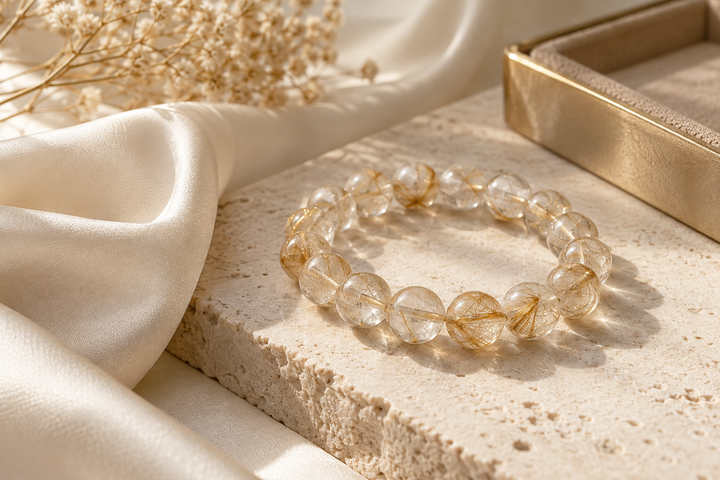
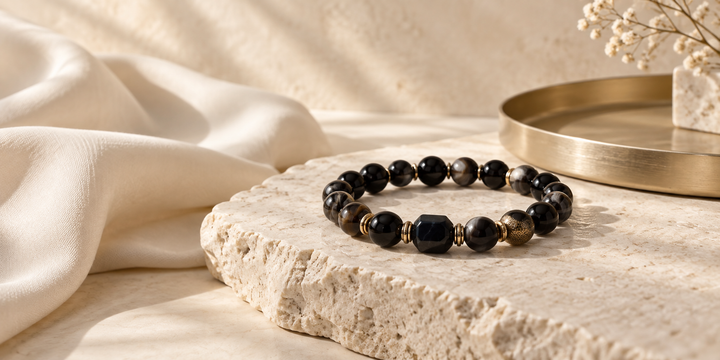
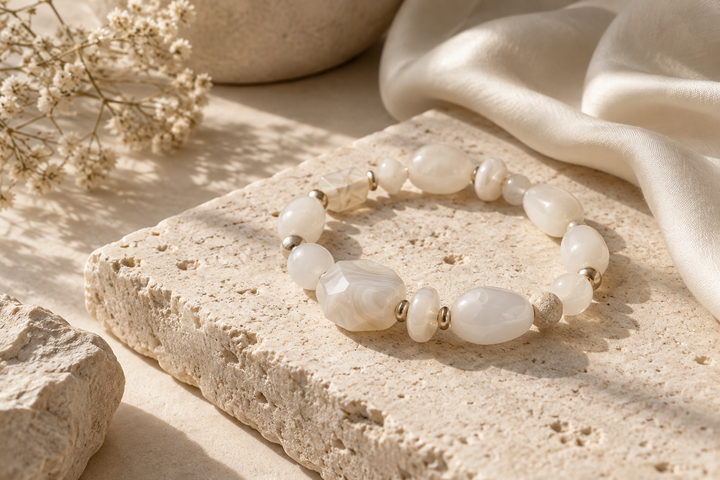
Why do crystal bracelets look different when they share the same design? Natural stone beads are selected from material with its own color, transparency, inclusions, and pattern. Even beads of the same named stone may not look identical. Cutting and polishing can reveal those features differently, while lighting and photography can change how they appear in a product image.
Those differences deserve a clear explanation, especially when you are comparing a bracelet in hand with the one you saw online. Some variation belongs to the stones. Other details—such as the listed materials, the essential design, and the size you ordered—should still match the product information. Appearance alone cannot tell you whether a gemstone is natural or authentic.
Natural Stones Are Not Visually Identical
A product photograph shows an individual bracelet, or an example of a design. It cannot show every possible bead that may be used in that design. One pale stone might appear nearly white; another may have a cream cast or a more visible internal feature. A green bead may be lighter or deeper than its neighbor. Both can belong in the same overall palette.
Why Color Can Vary
Color is rarely distributed in a perfectly uniform way through gemstone material. Some stones show gentle shifts in hue or saturation; others have more distinct areas of color. When beads are cut from different portions of a stone, those differences may become visible side by side. Two bracelets made with the same named materials can therefore feel slightly warmer, cooler, lighter, or more saturated.
Color also depends on how transparent or opaque a bead is. A translucent stone may pick up the tone of the surface behind it or look deeper against skin than it does against a white background. This is a visual effect, not a new material. Compare the overall palette in the listing rather than expecting each bead to match a photograph to the shade.
None of this means that every color difference is acceptable. The named materials and the intended color direction should still align with the product page. If a received piece looks substantially unlike the described design, that is a question worth raising with the seller.
Transparency, Cloudiness, and Inclusions
Some beads let light pass through clearly; others appear softly translucent or opaque. Within a single type of gemstone, clarity and internal texture may vary. A cloudy area can make one bead look milky beside a clearer one. Internal features may appear as fine lines, small points, or layered-looking areas, depending on the stone.
What an inclusion means
In gemology, an inclusion is a feature inside a gem, such as another mineral crystal or a cavity. The Gemological Institute of America explains how inclusions are studied and how they can affect a stone's appearance. Not every visible mark is an inclusion, and an inclusion is not automatically desirable, rare, or valuable. Its significance depends on the gem and the question being asked.
Patterns, Veining, and Bead-to-Bead Character
Patterned stones can show swirls, veins, bands, or areas of contrasting color. A bead cut from one part of the material may display a bold motif, while the next bead shows only a trace. Polishing shapes the surface and changes which internal features face outward. Small differences in cut or finish can also influence the way light catches each bead.
Why Mixed-Material Bracelets Show More Variation
When a design uses two or more stones, each material contributes its own range of color and transparency. The relationship between them changes as individual beads are selected. A little more green beside a luminous white bead can shift the balance of a bracelet without changing its materials or overall design.
For example, the Amora Pure Softness Bracelet lists White Moonstone and Green Aventurine. The softness of its white and green palette may come through differently in individual stones. That is a way to understand the appearance of a mixed-material bracelet, not a claim that every example has a particular pattern or an exact shade of green.
The Aurelia Golden Balance Bracelet lists Cherry Blossom Agate, Citrine, and 18K Gold-Plated Copper Accents. Pattern in the agate and the warm visual range of the stones can make individual pieces look subtly different. The listed metal accent material remains an important design fact; a change in natural stone pattern does not change what the metal should be.
Size can affect the arrangement of repeating elements, too. SoftLumina's Bracelet Size Guide explains that the number and spacing of repeating accent beads may vary slightly as a piece is adjusted to a selected wrist size, while focal stones, charms, color palette, and overall design remain consistent. The guide does not promise an identical bead count or spacing for every size.
How Lighting and Photography Change Appearance
The same bracelet can look different in daylight, warm indoor light, and cooler artificial light. Transparent or reflective surfaces pick up colors from their surroundings. A cream backdrop may make a pale stone look warmer; a gray backdrop may make it look cooler. Camera white balance can further shift the recorded color, and screen brightness affects what you see when viewing the image.
Photographs also freeze one viewing angle. Rotate a bead, and its pattern, internal features, and reflected highlights may change. A close-up can make a small inclusion prominent, while a full-bracelet photograph gives a better sense of overall color balance.
Photography is one factor, not a universal explanation for every discrepancy. When the color family, named materials, or design details look substantially different from the listing, compare the product description and ask for clarification. The goal is a fair representation of the piece, not a requirement that every bead be visually identical.
What Variation Is Normal—and What Should Stay Consistent?
Reasonable natural variation can include shifts in color, clarity, translucency, internal texture, and pattern. In a mixed-stone bracelet, the particular relationship among individual beads may vary as well. These differences should sit within the design described and pictured.
The product's core information should remain dependable: the listed stone materials, confirmed metal materials, essential bracelet construction, and the size selected under the seller's stated fit rules. Natural variation should not be used to excuse an undisclosed material substitution, a different design, or an incorrect size.
It helps to separate an aesthetic difference from a construction concern. A cloudy patch within a stone may be an appearance feature; a damaged component, loose finding, or visibly compromised elastic is a different matter. If the distinction is unclear, contact the seller with a clear photograph and the product listing. A careful response should address the specific detail rather than dismiss every concern as “natural variation.”
Does Variation Prove a Crystal Is Real?
No. Natural variation can be consistent with natural stone, but appearance alone is not sufficient to authenticate a gemstone. A uniform-looking bead is not automatically synthetic, and a patterned or included bead is not automatically natural. Color, bubbles, temperature, weight, scratches, or a phone flashlight cannot reliably answer that question on their own.
Reliable identification may require professional gemological examination or testing. GIA describes the combination of observations and instruments used to analyze colored stones. Those methods are more involved than a quick visual checklist. A product description should be judged on its documented materials and clear disclosure, not on an internet shortcut that claims to prove authenticity from a photograph.
What to Look for Before Buying
Start with the exact materials list. Does it identify each stone and describe metal accents accurately? Then review several photographs when available: a full view for the overall design, a closer view for texture, and an image that helps you understand the scale. Read any note about natural variation alongside the listing's size and care information.
Compare the color direction and construction rather than a single bead. If a specific detail matters to you—an especially pale palette, a visible pattern, or how the size is made—ask before ordering. For a broader decision checklist, see SoftLumina's guide to choosing a crystal bracelet.
How SoftLumina Approaches Natural Variation
SoftLumina's Craftsmanship page describes selected natural crystals as materials that may vary in color, pattern, clarity, and texture. Each product page remains the source for that design's actual materials and details. Read them together: the craftsmanship context explains why stones may differ, while the product listing tells you what the bracelet is meant to be.
Frequently Asked Questions
Why does my crystal bracelet look different from the photo?
Individual stones can vary in color, clarity, pattern, and translucency. Lighting, camera settings, and your screen may also change the appearance. Compare the listed materials and overall design; ask the seller if the difference is substantial.
Are inclusions normal in natural crystals?
Internal features can occur in natural gems, but their type and significance depend on the material. An inclusion is neither proof of authenticity nor automatically a sign of superior quality.
Can two bracelets made from the same stones have different colors?
Yes. Individual stones may differ in shade and color distribution, so two pieces made with the same named materials can have slightly different overall palettes. Their listed materials and essential design should still agree with the product page.
Does variation mean a crystal is real?
No. Variation alone cannot authenticate a gemstone. Reliable identification may require professional gemological testing, especially when origin or treatment matters.
Why do crystals look different under different lighting?
Warm and cool light, reflective surroundings, camera white balance, and screen settings affect perceived color. Transparency and viewing angle can change which internal features are most visible.
Should every bead in a natural crystal bracelet match exactly?
Not necessarily. Beads can vary subtly while the design remains coherent. The listed materials, core construction, and ordered size should remain consistent with the product information.
Choose With Clear Expectations
The answer to “why do crystal bracelets look different?” lies in the stones themselves, the way they are cut and combined, and the conditions in which they are photographed and viewed. Appreciate the character of individual beads while holding the finished piece to its published description. Explore SoftLumina's product details with that distinction in mind, and choose a bracelet whose materials and design feel right to you.